

The leap from 4G to 5G goes far beyond just faster internet—it’s a fundamental shift transforming how Artificial Intelligence (AI) and the Internet of Things (IoT) blend into our daily lives and workplaces. As 5G networks expand and 5G-Advanced (5G-A) emerges, real-time insights, large-scale automation, and immersive digital experiences are starting to become part of our everyday reality. But in what ways is 5G truly changing AI and IoT, and what can we expect for industries, cities, and regular people in the near future?
5G’s Key Contributions: More Than Just Speed
At its heart, 5G brings three key advances that unlock new possibilities for AI and IoT:
- Ultra-low latency: Cuts data transmission delays, which is vital for split-second AI tasks like self-driving vehicles and factory robots.
- Massive connectivity: Supports billions of IoT devices, far surpassing what 4G could handle.
- Edge computing enablement: Moves AI processing closer to devices, driving quick decisions and smarter infrastructure.
These improvements spark new, dynamic uses—imagine factories fixing machines before they break, on-the-job training through live augmented reality, or whole cities using real-time data from sensors to adapt to people’s movements and needs.
Edge Intelligence: Where 5G, AI, and IoT Meet
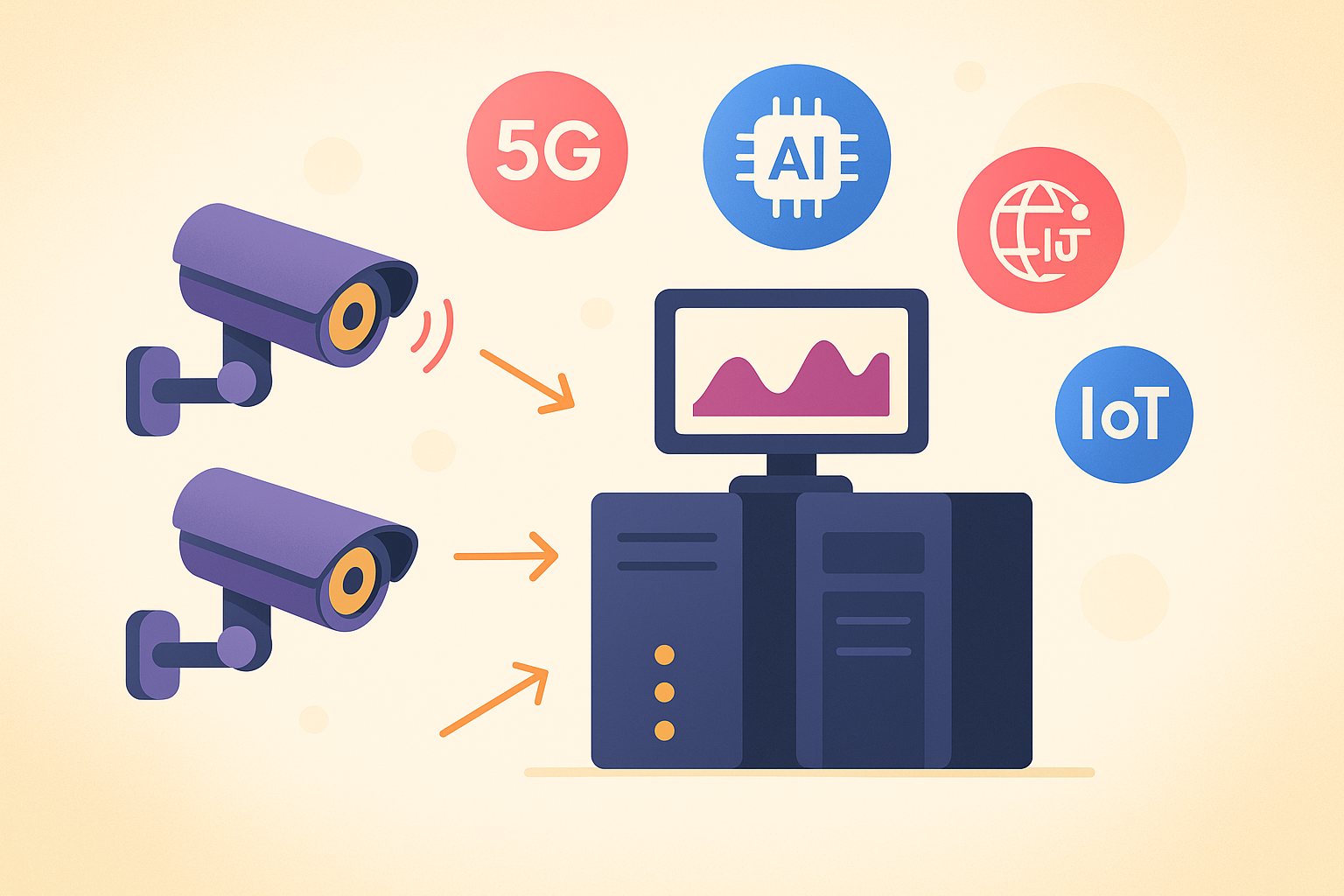
One of the standout advantages of 5G is its support for edge computing. With higher speeds and capacity, data can be processed where it’s collected—right at the source. This slashes delays and powers AI decisions in real-time. In fact, experts predict that by 2025, up to 75% of enterprise data will be processed at the edge, compared to just 10% today.
Take smart traffic systems for example: AI analyzes footage from hundreds of cameras to adjust traffic lights instantly. Even a tiny lag could cause traffic jams or put safety at risk. Thanks to 5G, data doesn’t need to make a round-trip to distant servers—it’s handled close to where things happen, providing timing and context right when it matters most.
Scalability for IoT: Building Smarter Cities and Industries
For IoT’s promise to be fulfilled—connecting everything from trucks to thermostats—a network must manage millions of devices talking at once. 5G’s massive Machine-Type Communications (mMTC) can support as many as a million devices per square kilometer. This unlocks environments where lighting, heating, inventory systems, and much more can all be seamlessly managed.
In manufacturing, this could mean production lines that spot and correct their own errors. In healthcare, round-the-clock sensors could help doctors respond to patient changes instantly. Cities can use networked sensors and analytics to conserve resources and cut down on waste.
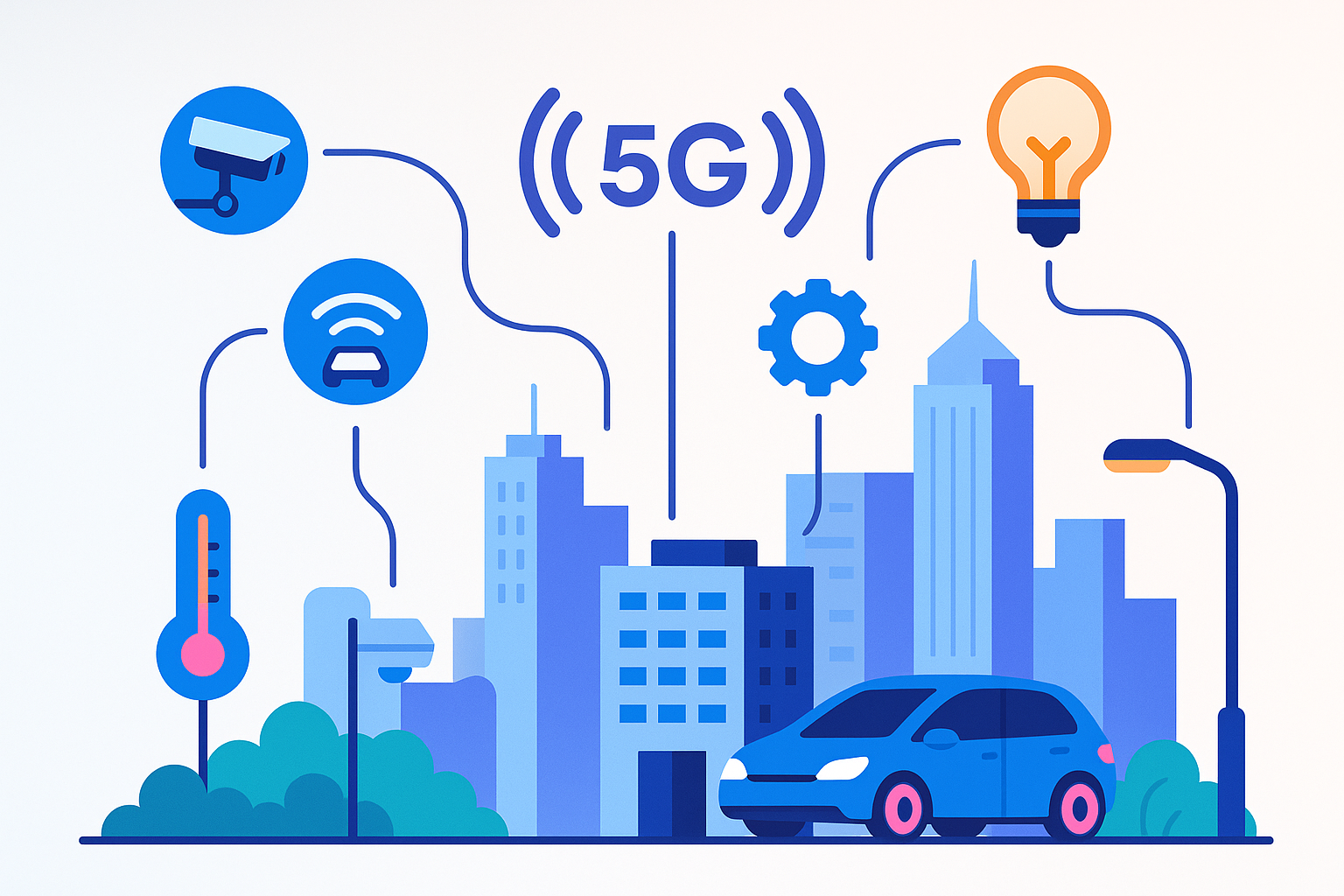
Real-world examples are here already. Vienna’s 5G-powered smart city platform, for example, blends AI with sensors to fine-tune energy use and boost public safety. Around the globe, factories using automated 5G and AI solutions are cutting downtime and pushing production higher.
5G-Advanced: The Next Leap Forward
As 5G-A rolls out through 2025, we’ll see these benefits grow even more. Network slicing will carve out dedicated “lanes” for important IoT uses—like making sure life-saving hospital equipment or emergency sensors always get first priority. Telecom companies are already embracing AI for everything from optimizing networks to understanding customers better. By the end of 2024, 18% have deployed generative AI solutions, with over half more currently testing this technology.
Technologies like Open RAN, paired with AI and machine learning, will help networks become more flexible and powerful—crucial for serving advanced IoT applications in business or bringing rich AR/VR experiences into classrooms and stores.
Key Challenges: Security, Complexity, and Regulation
While the opportunities are huge, integrating 5G, AI, and IoT does bring new hurdles:
- Data Security: More devices and local processing mean larger attack surfaces and evolving privacy issues. Protecting sensitive information, especially in areas like healthcare or finance, demands strong encryption and AI-powered security tools.
- Integration Costs: For smaller businesses, bringing advanced 5G and AI systems on board can be expensive and complicated, especially without a clear business case or simple integration tools.
- Regulatory Hurdles: As AI and IoT create unprecedented amounts of personal and business data, there’s a growing need for clear global standards around privacy, how data is shared, and transparency in decision-making.
Vendor Strategies and the Global Race
Industry leaders like Huawei and Ericsson are in a race, each rolling out advanced 5G-A features, forging new regional partnerships, and building their own approaches to AI integration. Regional differences bring both opportunities and challenges—Asia leads the pack in rolling out enterprise 5G, while some areas of Europe and North America lag due to regulatory hurdles.
This competitive landscape will decide not only who builds tomorrow’s network backbone, but also how quickly the AI/IoT revolution reaches people and businesses everywhere.
Future Perspectives: Beyond 2025
5G lays the groundwork for much of tomorrow’s digital transformation. Looking into the future, 6G is expected to deepen these relationships even further, providing more accurate location tracking, sensing, and built-in AI abilities. At the same time, the move toward greener, energy-efficient edge AI aims to keep this transformation sustainable—a top priority as both technology and environmental concerns accelerate.
By 2030, it’s expected that AI’s impact on the global economy will surpass $15 trillion—much of it driven by 5G-enabled applications woven into every aspect of life.
Practical Considerations: Deploying 5G-AI-IoT Solutions
For organizations looking to take the next step, important priorities include:
- Reviewing what edge computing infrastructure and device connections will be needed
- Understanding privacy rules and data regulations that could impact deployment
- Starting with trial projects—such as connected robots in manufacturing or smarter traffic lights—before taking things large-scale
- Keeping up-to-date with regional and international standards for more seamless adoption
Watching how large AI models evolve can also offer insight into the future of generative and more context-aware AI tools. For a deeper look at how these models are shaping new tech, check out this guide.
Closing Thoughts
The collaboration between 5G, AI, and IoT is already changing what we once thought possible—from smart workflows in companies to entirely new ways to experience city living. As rollout continues, we all stand to benefit from these advances, provided critical challenges like cybersecurity and integration complexities are tackled directly.
Want to keep learning? Explore AI safety for kids or discover how digital assistants keep evolving with chat AI characters.