


The Apple AirPods Pro 3 sit at the center of Apple’s audio lineup as of early 2026. Launched in September 2025 at $249, they refine the Pro formula with stronger noise cancellation, deeper Apple Intelligence integration, and new health-tracking abilities. If you are wondering whether they are worth the money, how they compare to earlier models, and what the 2026 rumors might mean, this guide walks through the key features and design choices in simple, real-world terms.
Release timeline, pricing, and where AirPods Pro 3 fit
Apple introduced AirPods Pro 3 on September 9, 2025, with in-store availability starting September 19. The price stayed at $249, keeping them firmly in the premium ANC earbuds category alongside Sony’s WF-1000XM5 and Bose QuietComfort Ultra Earbuds.
Within Apple’s lineup, they are the flagship “Pro” earbuds—above the regular AirPods—aimed at people who care most about noise cancellation, sound quality, and tight integration with Apple devices. Interest is currently split between two groups:
- People buying and using the confirmed 2025 AirPods Pro 3 model.
- People following leaks about a rumored 2026 revision or “AirPods Pro 4.”
This article focuses first on the real, currently available AirPods Pro 3, then covers the 2026 speculation so you can make a grounded decision based on what exists today.
Design and fit: small tweaks, big comfort gains
At a glance, AirPods Pro 3 look familiar: short stems, silicone tips, compact case. The changes are subtle but meaningful once you use them:
- Refined ergonomics: Apple reworked the angle and contour of the buds for better weight distribution. In everyday use, that means less pressure on the ear canal and more stability when moving around.
- Improved tip design: The ear tips use a slightly softer material and a better sealing ridge, which helps both comfort and passive noise isolation.
- Secure fit for workouts: Combined with the heart rate sensor and IP57 rating, the design finally feels intentionally “fitness-ready” rather than just “okay for the gym.”
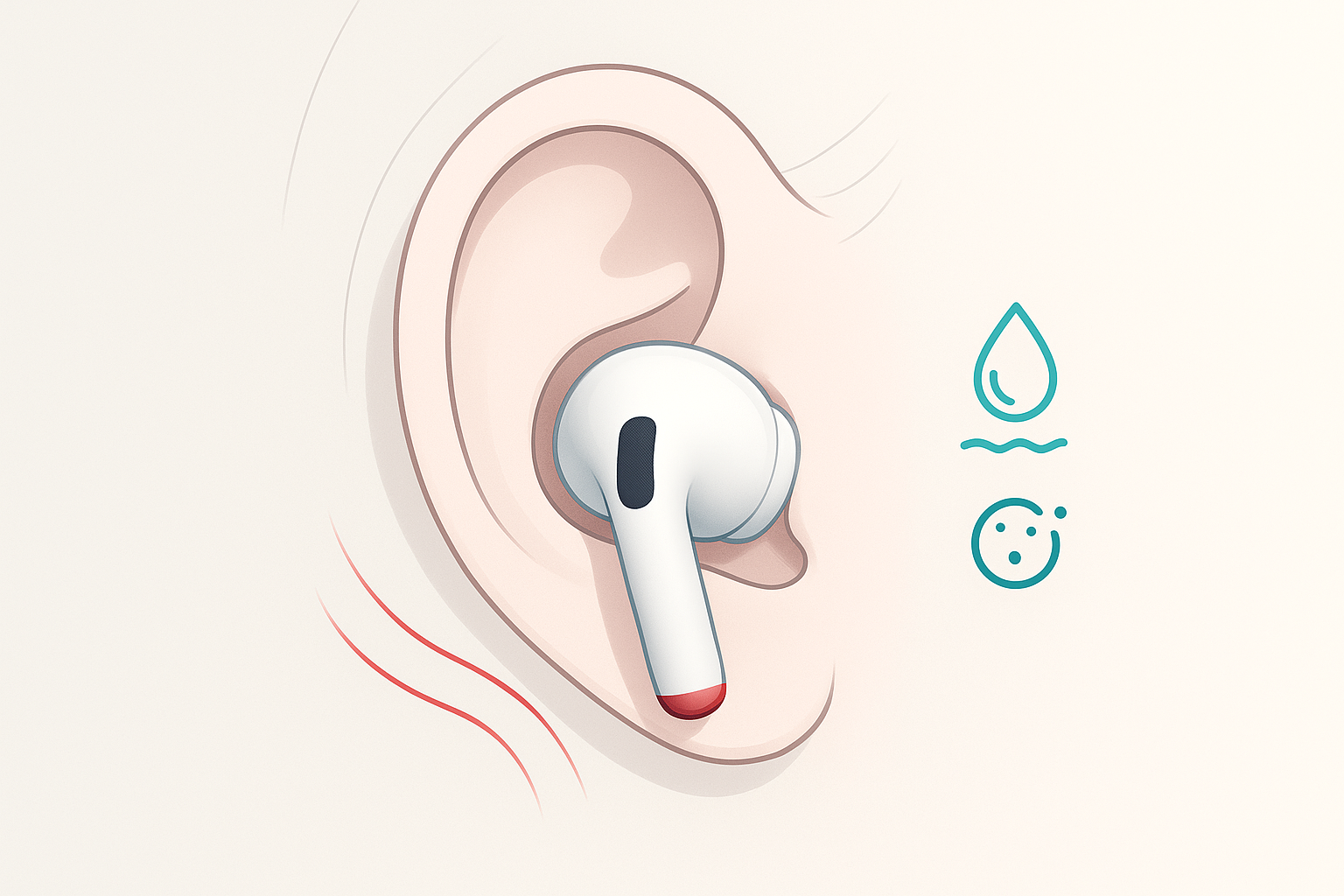
For long sessions—remote work calls, flights, or multi-hour listening—the new weight balance is one of the most noticeable upgrades over older models. You spend less time nudging them back into place, have fewer “hot spots” in the ear, and get a more secure feel when walking, commuting, or running.
Audio performance and spatial audio
The AirPods Pro 3 still use the H2 chip (in the 2025 model), but Apple has pushed it further with updated software tuning:
- Richer soundstage: Bass has more control and punch without drowning the mids, while vocals sit more clearly in the mix. Highs are cleaner, with less sharpness when you turn the volume up.
- Adaptive EQ: On-device processing constantly adjusts the sound based on your ear shape and seal, so the audio stays consistent even when you move or the fit shifts slightly.
- Spatial audio: With head tracking and personalized ear scanning (via iPhone), movies and some music mixes gain a theater-like, positional feel. When it works well, dialogue feels anchored to the screen while ambient effects wrap around you.
If you are coming from AirPods Pro 2, the difference is not a dramatic leap in pure sound quality, but you do notice extra clarity, better separation, and more stable tuning across different volumes and environments.
Noise cancellation: what “2x better” means in real life
Apple claims up to 2x better active noise cancellation (ANC) compared with AirPods Pro 2. In daily use, that claim holds up in a few clear situations:
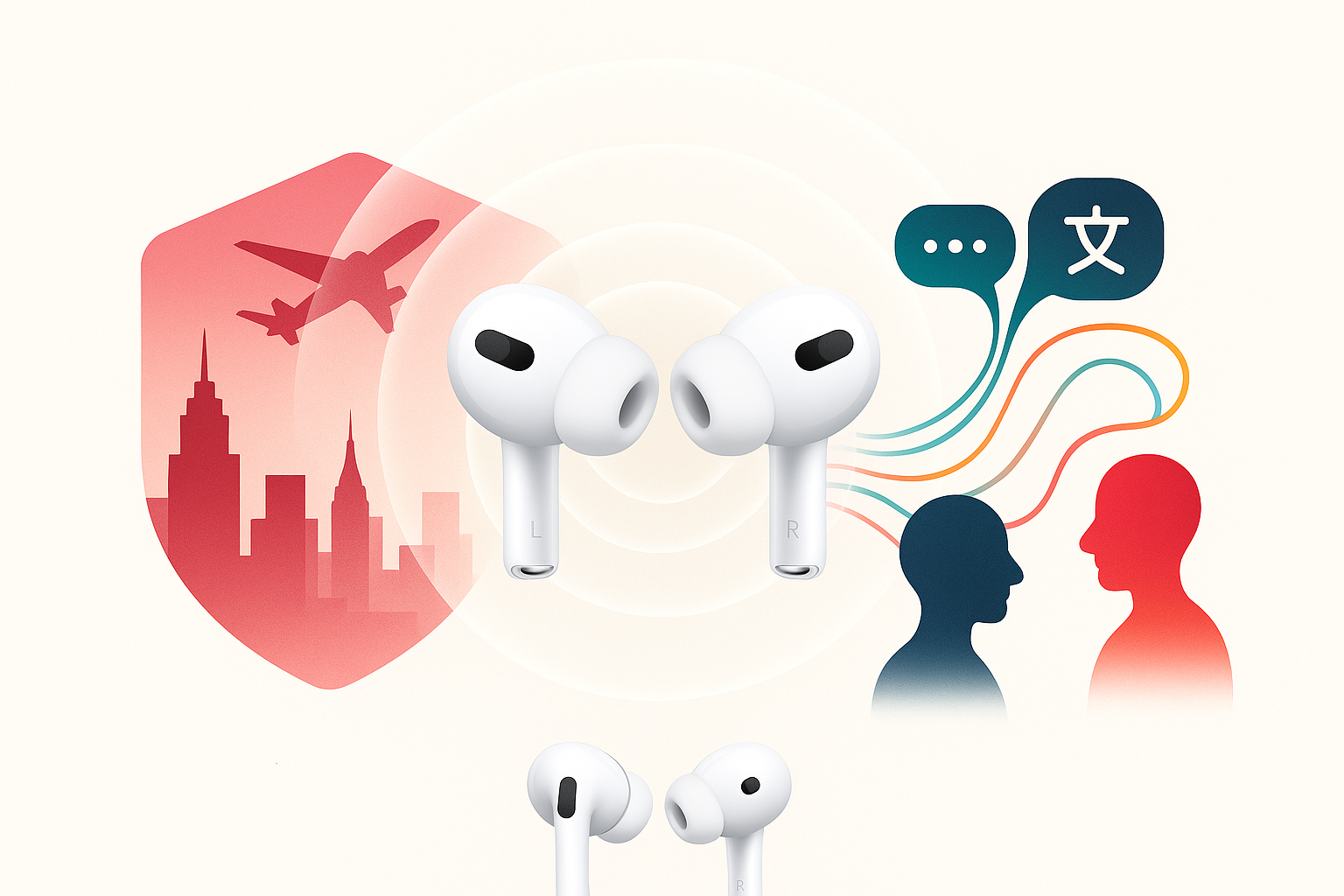
- Airplanes: The low drone of engines and cabin hum is more heavily reduced. You still hear muffled announcements, but the constant roar fades into the background, especially with music at moderate levels.
- City streets and public transit: Engine noise, tire rumble, and general road hum are cut down more strongly. Sudden loud sounds (horns, braking) are softened but still audible so you stay aware of your surroundings.
- Offices and cafés: AC noise, keyboard tapping, and distant chatter are dramatically reduced. Nearby voices still break through more than a steady background noise, but enough is filtered out to help you concentrate.
The “2x” claim comes from a mix of better passive isolation from the revised fit and more precise cancellation from the microphones and processing. Where Pro 2 could struggle with changing noise—like a train pulling into a station—Pro 3 adjusts more smoothly, with fewer pressure shifts or obvious pumping effects.
Transparency, adaptive audio, and hearing protection
One of Apple’s strengths is how smoothly AirPods can switch between blocking noise and letting it in. AirPods Pro 3 build on this with:
- Personalized Transparency mode: It analyzes your surroundings and selectively lowers loud or harsh sounds while still letting voices and key ambient cues through. Busy street noise is toned down without cutting you off from traffic awareness.
- Adaptive audio modes: The earbuds adjust ANC and transparency in real time based on the noise level around you. In quiet rooms, they ease off ANC to reduce ear fatigue; in loud places, they automatically increase noise blocking.
- Hearing protection: AirPods Pro 3 can detect when you are in loud environments for a long time and gently prompt you to lower the volume or take breaks. In supported regions (including EU/UK), this ties into system-wide hearing health summaries.
These features matter most if you wear earbuds for many hours a day. Instead of constantly switching modes yourself, you can let the system react for you, while still staying within safer listening ranges over the long term.
Health and fitness features: heart rate and more
One of the standout additions in Apple AirPods Pro 3 is deeper health tracking:
- Heart rate sensing: Built-in sensors can track heart rate during workouts or throughout the day, syncing data to Apple Health. For people who do not like chest straps or find watches distracting, this is a handy backup or second data source.
- Workout integration: During runs, HIIT sessions, or cycling, you can see heart rate zones and summaries without needing to check your watch or phone as often.
- Potential for future metrics: While Apple has not turned AirPods into full medical devices, the mix of sensors and Apple Intelligence hints that more advanced wellness metrics could arrive through future software updates.
Health tracking in your ears will not fully replace a watch for serious athletes, but it adds useful redundancy and convenience. If you are already exploring AI tools and health-related features across devices, you may also be interested in how AI-focused apps balance privacy and safety for younger users, as discussed in this guide on Talkie AI safety for kids.
Apple Intelligence and Live Translation
AirPods Pro 3 lean heavily on Apple Intelligence (when paired with compatible iPhones, iPads, or Macs). One of the most eye-catching features is Live Translation:
- Real-time translation in conversations: During a one-on-one chat, the system can listen, translate, and play back responses in your chosen language, directly in your ears.
- Travel scenarios: Ordering food, asking for directions, or navigating public transport abroad becomes smoother—you speak normally, and the earbuds help bridge the language gap.
- Work and remote collaboration: Multilingual calls or global team meetings become more accessible, especially when paired with captions or translations on screen.
Live Translation still depends on ongoing software updates and device support, but AirPods Pro 3 provide the audio hardware tuned for low-latency processing and clear speech input and output.
Battery life, durability, and daily use
Battery life on AirPods Pro 3 lines up with what you would expect from modern premium earbuds:
- Several hours of listening with ANC on (the exact number depends on volume and features like spatial audio).
- Multiple recharges from the case, giving you a full day or more of combined use.
The IP57 rating is a notable upgrade. It means:
- Dust protection: Resistant to limited dust ingress, which helps for outdoor and workout use.
- Water resistance: Can handle sweat, rain, and brief submersion better than previous models.
In daily life, this gives you more confidence at the gym, during outdoor runs, or in light rain—without stressing as much about sweat or splashes. Over several years, you can still expect normal lithium‑ion battery aging; if you are a heavy user, it is wise to plan for possible battery service or replacement down the line.
AirPods Pro 3 vs. AirPods Pro 2 and competitors
Compared with AirPods Pro 2, the main upgrades in Pro 3 are:
- Noticeably better ANC in real-world conditions.
- A more comfortable, stable fit for long listening sessions.
- New health features like heart rate sensing.
- Deeper Apple Intelligence tools such as Live Translation.
Against rivals like Sony WF-1000XM5 or Bose QuietComfort Ultra Earbuds, the choice usually comes down to what you value most:
- Choose AirPods Pro 3 if: You live in the Apple ecosystem, want seamless device switching, enjoy spatial audio, and care about Apple-only AI features.
- Choose Sony/Bose if: You mainly use Android, prefer more flexible EQ control, or want the strongest possible ANC and do not mind losing Apple-specific extras.
If you are curious about how AI models and on-device intelligence power features like translation, voice recognition, and real-time processing, this broader explainer on large language models gives useful background.
Rumored 2026 update: H3 chip, cameras, and beyond
Alongside the current model, leaks and analyst reports point to a possible 2026 follow-up, sometimes described as a revised AirPods Pro 3 or AirPods Pro 4. These details are not confirmed, but common rumors include:
- H3 chip: A new audio and AI processor that could further boost ANC, adaptive audio, and battery efficiency.
- Infrared (IR) cameras: Small cameras in the case or buds for “Visual Intelligence”—potentially recognizing surroundings, gestures, or even supporting more advanced health monitoring.
- Deeper health features: Speculation ranges from stronger biometrics to more precise hearing-related measurements.
- Possible fall 2026 release: Often rumored to arrive alongside new iPhones.
Rumors are fun to follow, but they should not overshadow what the current AirPods Pro 3 already deliver. If you need ANC earbuds now for travel, work, or workouts, the 2025 model is polished and full-featured. If you can comfortably wait a year or more and are especially interested in visual AI features, it might be worth holding off—just keep in mind that timelines and features can change.
Is now the right time to buy AirPods Pro 3?
Whether you should buy now depends on what you already own and what you care about most:
- Using original AirPods or AirPods Pro 1: AirPods Pro 3 are a major upgrade across the board—ANC, sound quality, comfort, health features, and Apple Intelligence integration.
- Using AirPods Pro 2: Upgrading makes the most sense if you value stronger ANC, the new health and hearing features, and you often travel or work in noisy environments.
- New to AirPods: If you are deep in the Apple ecosystem and want premium earbuds that feel seamless with your devices, Pro 3 are an easy recommendation.
At the same time, AI-powered experiences—from earbuds to chat apps and character-based tools—are changing how we use technology day to day. If you are exploring AI assistants or conversational tools, you might also find it helpful to compare different AI character platforms such as Chat AI characters or alternatives to older character-based AI services like Old Character AI, both of which show how quickly this space is evolving.
For most people, Apple AirPods Pro 3 land in a very strong spot: premium sound and ANC, a more comfortable fit, built-in health tracking, and forward-looking AI features that are likely to improve over time. With a clear line between what exists today and what is still rumor for 2026, you can decide with more confidence whether now is the right moment to invest in Apple’s latest Pro earbuds.